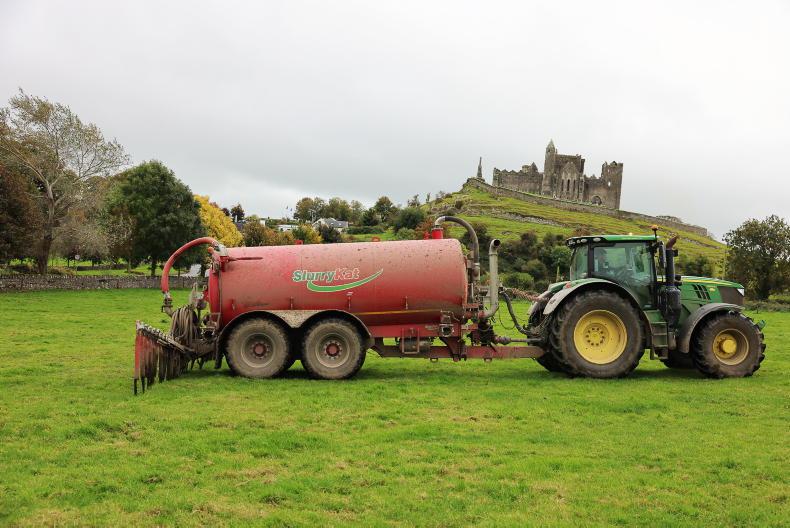
It’s that time of the year when farmers and contractors across the country are pushing to lower tanks, and get some slurry out to get early grass growth under way.
Tanks are filled on many farms, and after a lot of rainfall, even good land is suffering. The advice still stands – do not spread slurry on waterlogged land.
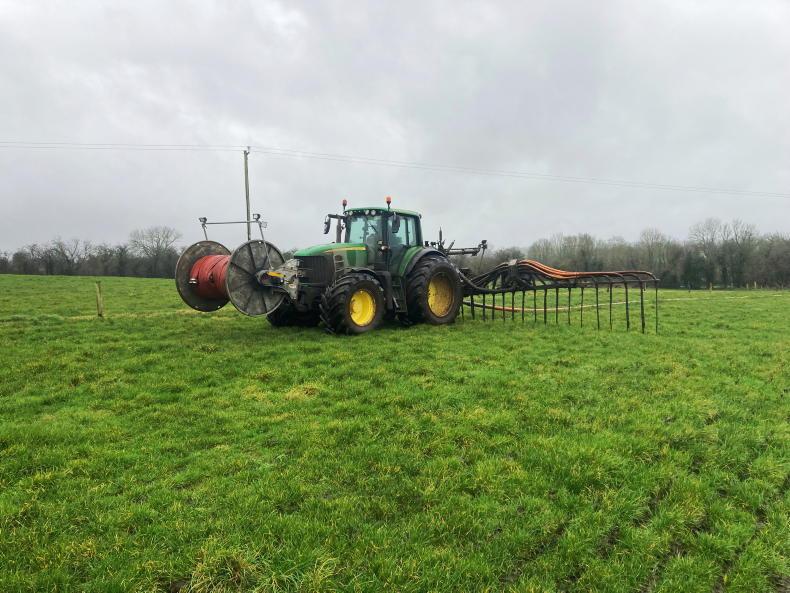
Traffic on any land at this time of the year can harm soil structure, so it’s important that soil compaction/compression is minimised. Umbilical systems have revolutionised slurry spreading in this country – and upgrading these systems to tractors with wider tyres is a natural progression.
One such contractor who bit the bullet and made the move to wider tyres is Cecil Hall, from Keenagh in Co Longford. Contracting for the past 35 years, Cecil is a second-generation contractor.
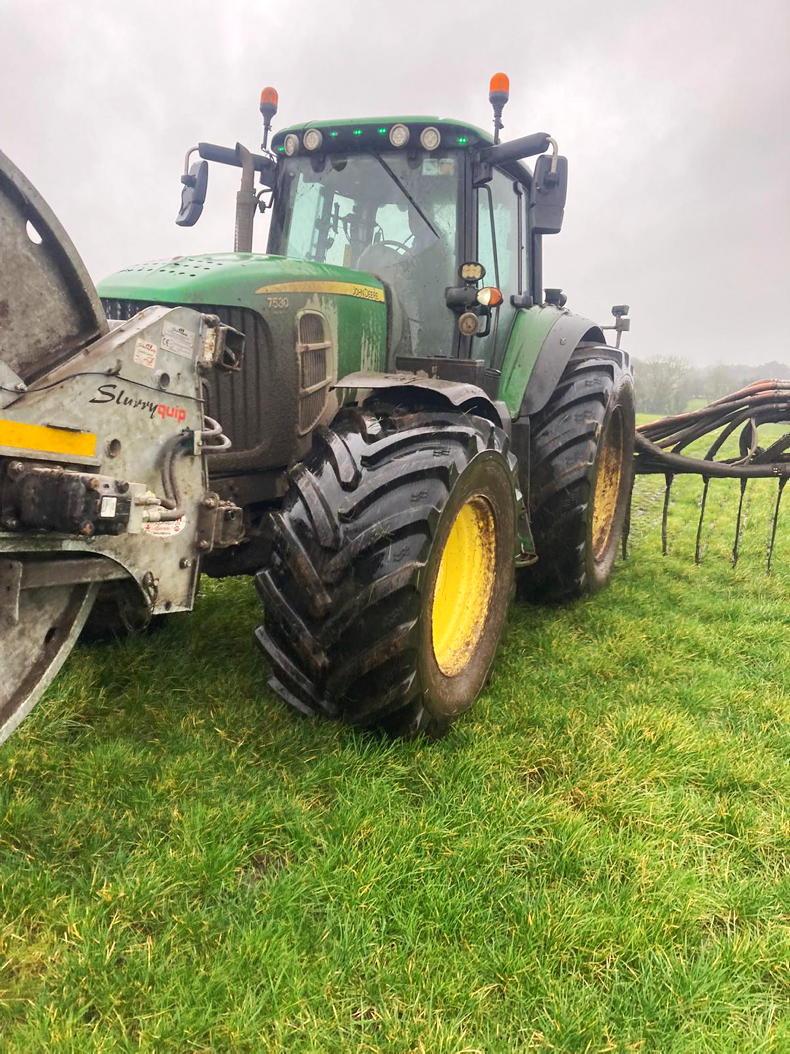
Cecil opted for Alliance VF900/50R42 on the rear and 710/55R30 on the front.
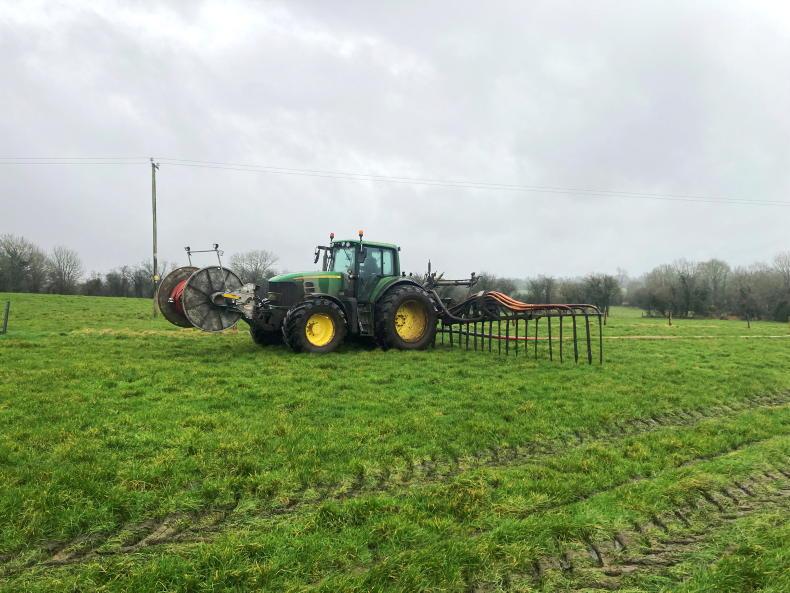
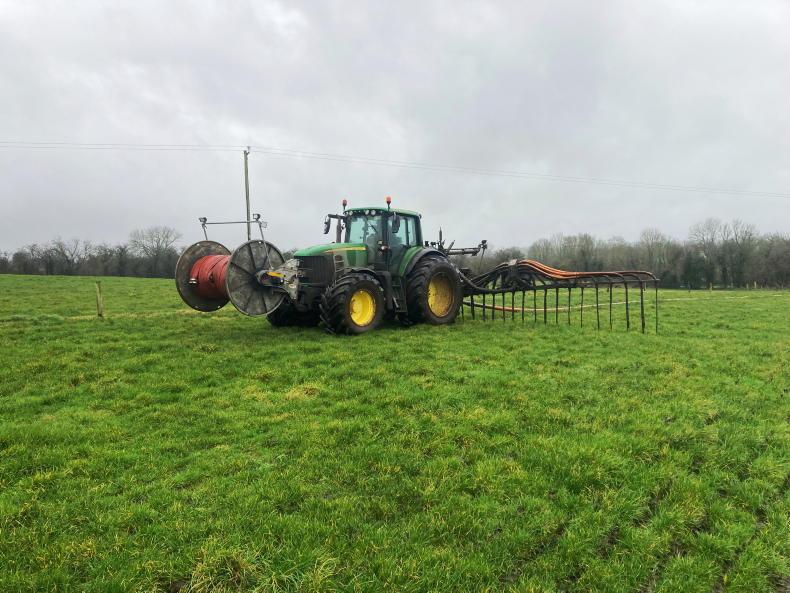
He bought his first umbilical system four years ago, and hasn’t looked back since. He runs a 12m twin macerator SlurryQuip system, with 1,500m of piping- split between four and one third inch and five inch hose.
Cecil isn’t one to rest on his laurels, and last year decided the next step for his slurry business was to fit wider flotation tyres to his field tractor, which is a John Deere 7530. Previously running 710s on the rear, and 600s on the front, Cecil felt that 800s weren’t wide enough, and that 900s on the rear and 710s on the front would be the best option.
Tyre options
After looking into several different brands of tyres and rim manufacturers, Cecil sat down with Kevin Burke, from Kevin Burke Tyres (KBT) in Athenry, Co Galway. Cecil explained that his major concern was that the tractor had to be kept within a width of 9ft 6in, to allow him to pass through a bridge which is near his farmyard. After a discussion, they opted for VF900/50R42 on the rear and 710/55R30 on the front.
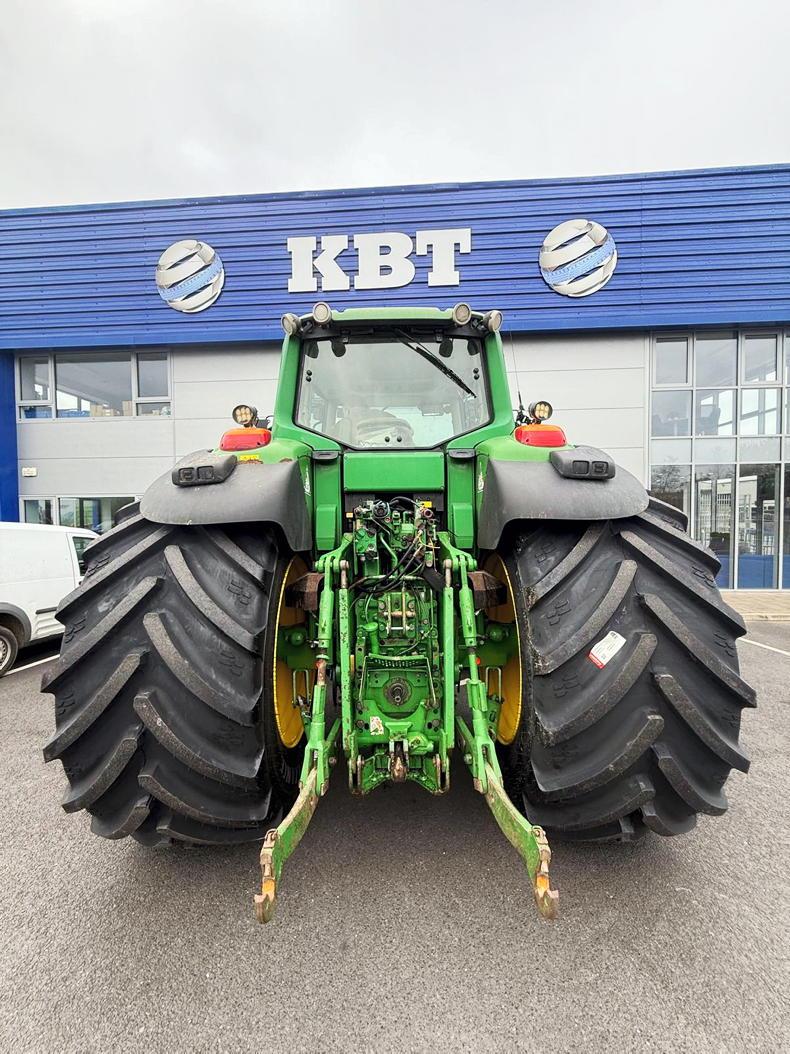
This is the first set of Alliance 372 Agriflex+ Very High Flexion tyres sold in Ireland.
The front tyres are priced at €1,300 plus VAT each and the rear tyres are priced at €2,500 each.
To keep the overall width narrow, the rims had to be fabricated to run as tight to the tractors fuel tank and chassis as possible. This involved fabricating negative offset rims to suit.
A negative offset means the rim’s mounting pad is positioned closer to the chassis. This is essentially welding the inner dish at the desired offset position on the rim. To fabricate the rims tailored to the tractor, Cecil brought the tractor to KBT in Athenry.
Kevin says this is important, as modern tractors tend to have larger diesel tanks, and nowadays often AdBlue tanks are placed within the vicinity of the wheel arches. This can mean that more of an offset may have to implemented when making the rim.
VF tyres
Based on Kevin’s advice, Cecil opted for the Alliance 372 Agriflex+ Very High Flexion (VF) tyres. This happened to be the first set of these particular tyres sold in Ireland. In recent years, we see more tyre manufacturers offering increased flexion (IF) and VF high-deflection tyre carcases in an increasing number of tyre sizes.
IF tyres can carry load at 20% lower pressure than a standard tyre, or carry 20% more load at the same pressure. VF tyres can carry load at 40% lower pressure than normal, or similarly carry 40% more load than a standard tyre. This technology in tyres also allows a longer section of the tyre to be in contact with the ground, lowering ground pressure and adding traction benefits.
Such tyres come at a price premium in comparison to tyres of similar dimensions. Kevin Burke explained that IF and VF tyres are between 15-20% more expensive than standard tyres. However, as the number of manufacturers offering IF/VF tyres increase, this premium should drop.
Verdict
“The 900s and 710s do a super job to further spread the weight of the tractor. Ground conditions at the minute are challenging, and the big tyres are a massive help to minimise compaction.
“We opted for the VF tyres, which we are running at 15 psi. We set the tyres at this pressure, and tend to keep it the same for field and road work, it’s a happy medium, but still gives us a large footprint over the ground. The tyres were well worth the investment,” explained Cecil.
It’s that time of the year when farmers and contractors across the country are pushing to lower tanks, and get some slurry out to get early grass growth under way.
Tanks are filled on many farms, and after a lot of rainfall, even good land is suffering. The advice still stands – do not spread slurry on waterlogged land.
Traffic on any land at this time of the year can harm soil structure, so it’s important that soil compaction/compression is minimised. Umbilical systems have revolutionised slurry spreading in this country – and upgrading these systems to tractors with wider tyres is a natural progression.
One such contractor who bit the bullet and made the move to wider tyres is Cecil Hall, from Keenagh in Co Longford. Contracting for the past 35 years, Cecil is a second-generation contractor.
Cecil opted for Alliance VF900/50R42 on the rear and 710/55R30 on the front.
He bought his first umbilical system four years ago, and hasn’t looked back since. He runs a 12m twin macerator SlurryQuip system, with 1,500m of piping- split between four and one third inch and five inch hose.
Cecil isn’t one to rest on his laurels, and last year decided the next step for his slurry business was to fit wider flotation tyres to his field tractor, which is a John Deere 7530. Previously running 710s on the rear, and 600s on the front, Cecil felt that 800s weren’t wide enough, and that 900s on the rear and 710s on the front would be the best option.
Tyre options
After looking into several different brands of tyres and rim manufacturers, Cecil sat down with Kevin Burke, from Kevin Burke Tyres (KBT) in Athenry, Co Galway. Cecil explained that his major concern was that the tractor had to be kept within a width of 9ft 6in, to allow him to pass through a bridge which is near his farmyard. After a discussion, they opted for VF900/50R42 on the rear and 710/55R30 on the front.
This is the first set of Alliance 372 Agriflex+ Very High Flexion tyres sold in Ireland.
The front tyres are priced at €1,300 plus VAT each and the rear tyres are priced at €2,500 each.
To keep the overall width narrow, the rims had to be fabricated to run as tight to the tractors fuel tank and chassis as possible. This involved fabricating negative offset rims to suit.
A negative offset means the rim’s mounting pad is positioned closer to the chassis. This is essentially welding the inner dish at the desired offset position on the rim. To fabricate the rims tailored to the tractor, Cecil brought the tractor to KBT in Athenry.
Kevin says this is important, as modern tractors tend to have larger diesel tanks, and nowadays often AdBlue tanks are placed within the vicinity of the wheel arches. This can mean that more of an offset may have to implemented when making the rim.
VF tyres
Based on Kevin’s advice, Cecil opted for the Alliance 372 Agriflex+ Very High Flexion (VF) tyres. This happened to be the first set of these particular tyres sold in Ireland. In recent years, we see more tyre manufacturers offering increased flexion (IF) and VF high-deflection tyre carcases in an increasing number of tyre sizes.
IF tyres can carry load at 20% lower pressure than a standard tyre, or carry 20% more load at the same pressure. VF tyres can carry load at 40% lower pressure than normal, or similarly carry 40% more load than a standard tyre. This technology in tyres also allows a longer section of the tyre to be in contact with the ground, lowering ground pressure and adding traction benefits.
Such tyres come at a price premium in comparison to tyres of similar dimensions. Kevin Burke explained that IF and VF tyres are between 15-20% more expensive than standard tyres. However, as the number of manufacturers offering IF/VF tyres increase, this premium should drop.
Verdict
“The 900s and 710s do a super job to further spread the weight of the tractor. Ground conditions at the minute are challenging, and the big tyres are a massive help to minimise compaction.
“We opted for the VF tyres, which we are running at 15 psi. We set the tyres at this pressure, and tend to keep it the same for field and road work, it’s a happy medium, but still gives us a large footprint over the ground. The tyres were well worth the investment,” explained Cecil.





SHARING OPTIONS